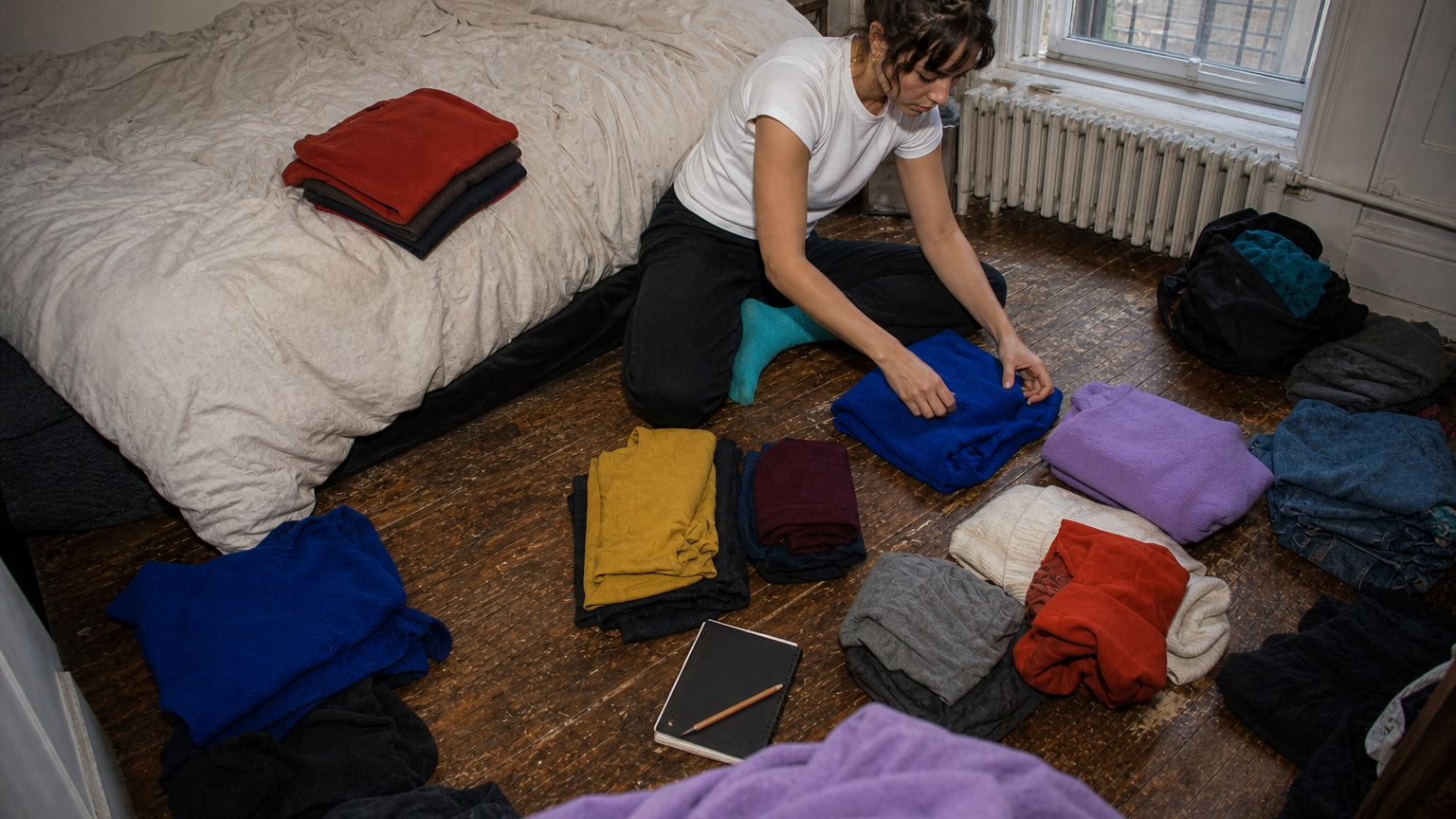
Keep a borrowed garment separate from your owned wardrobe count. Record only what you know from the owner or from an agreement you both recognise: that the item is borrowed, whose decision governs its return, and any timing you have actually stated. If you cannot tell whether something is borrowed, shared, or a gift, leave the boundary unresolved. Having the garment, photographing it, or wearing it once does not settle ownership.
Start with the ownership boundary
An owned wardrobe count is useful only when it describes what is yours to count. Temporary access is different. A borrowed jumper may be in your home and available today, yet still belong to someone else. Begin with the simplest private source you have: a clear conversation, a note you both recognise, or your own reliable understanding of the arrangement. Do not turn that source into a legal conclusion.
You do not need to record another person’s name, messages, address, photograph, or relationship to apply this boundary. The point is not to build a loan file. It is to avoid calling an item owned when its ownership is not yours to claim.
Use a three-part boundary card
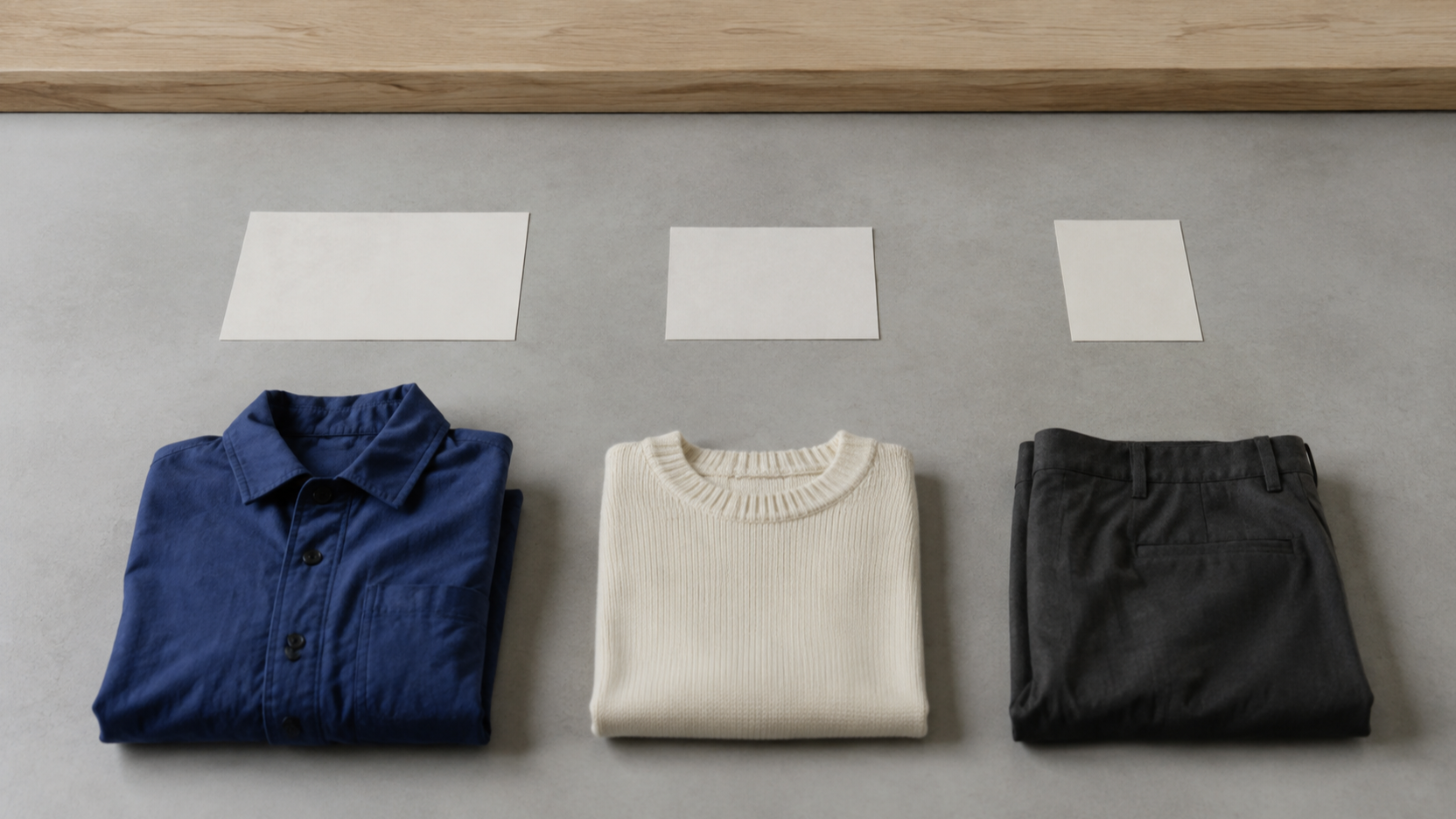
For one garment, write three short lines: ownership stated; return decision follows; unresolved. The first line records only the boundary you know. The second identifies whose decision governs what happens next, without adding a date or instruction. The third protects an uncertainty from being quietly rewritten as a fact.
A card can be as small as: “borrowed”; “owner decides”; “no timing agreed.” That is enough. It does not say when to return the garment, whether it needs cleaning, who paid for it, what it is worth, or whether you should wear it.
Leave it out when the boundary is unclear
If the ownership boundary is unclear, do not add the garment to an owned count. This is not a judgement about whether you may use it or whether the arrangement is important. It is simply a way to keep a personal number from claiming more certainty than you have. The item can remain available to you without becoming part of the count.
What this card cannot decide
This card cannot decide ownership in law, the terms of a loan, whether or when something should be returned, care or cleaning responsibilities, insurance, condition, value, price, cost per wear, or whether an item belongs in an outfit. It is not relationship advice. It does not ask you to buy, keep, donate, repair, store, sell, photograph, or share anything.
Source limits
The Consumer Financial Protection Bureau describes using personal receipts and records to tally spending in a general personal-finance context. That supports a narrow principle: records should match the thing they are meant to describe. It does not define clothing ownership, a loan, a shared household arrangement, or a financial outcome.
CLOOTHE Editorial reviewed this guidance on September 4, 2026. This article is deliberately limited to one ownership-count boundary using private reader-held information.