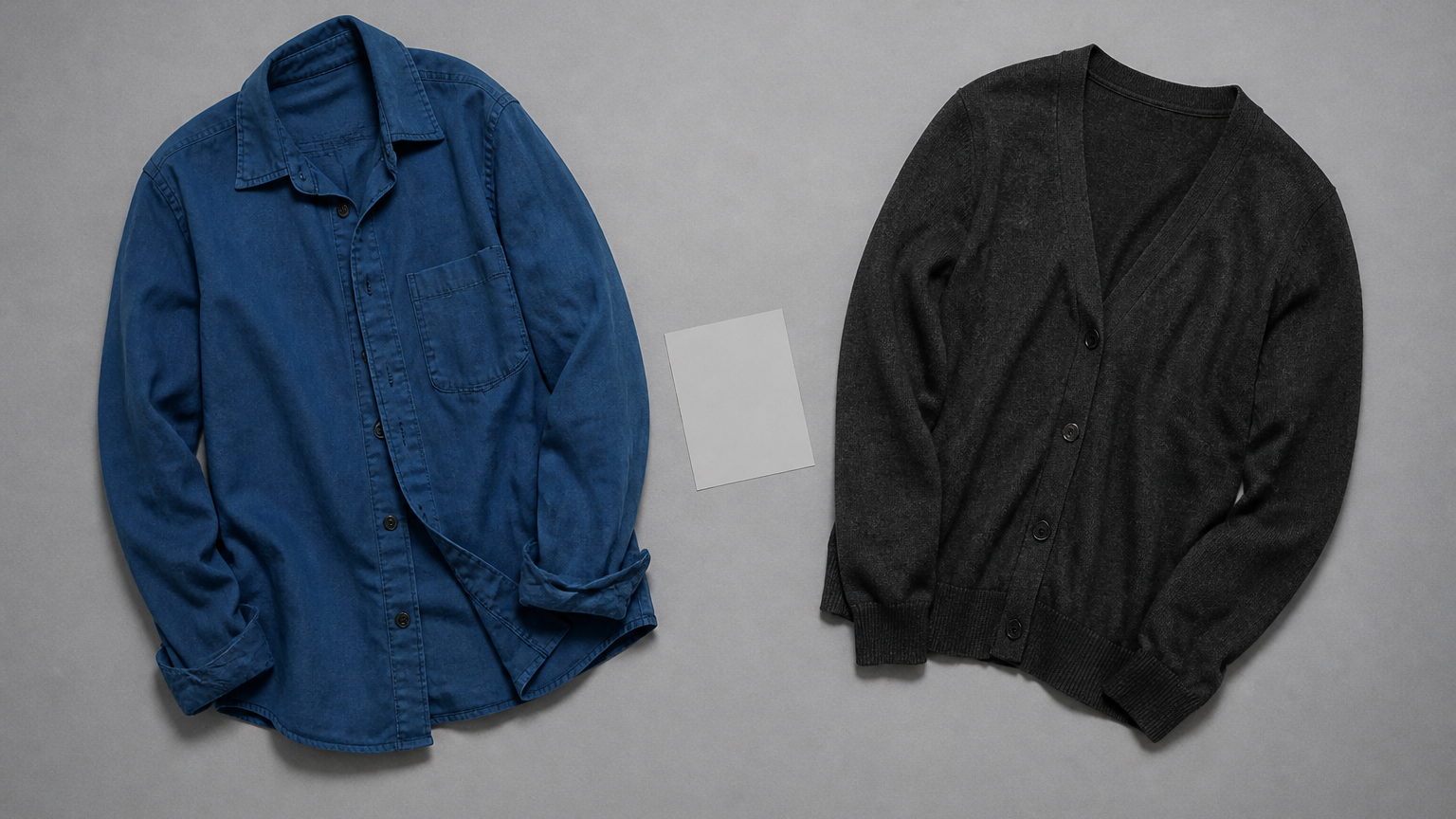
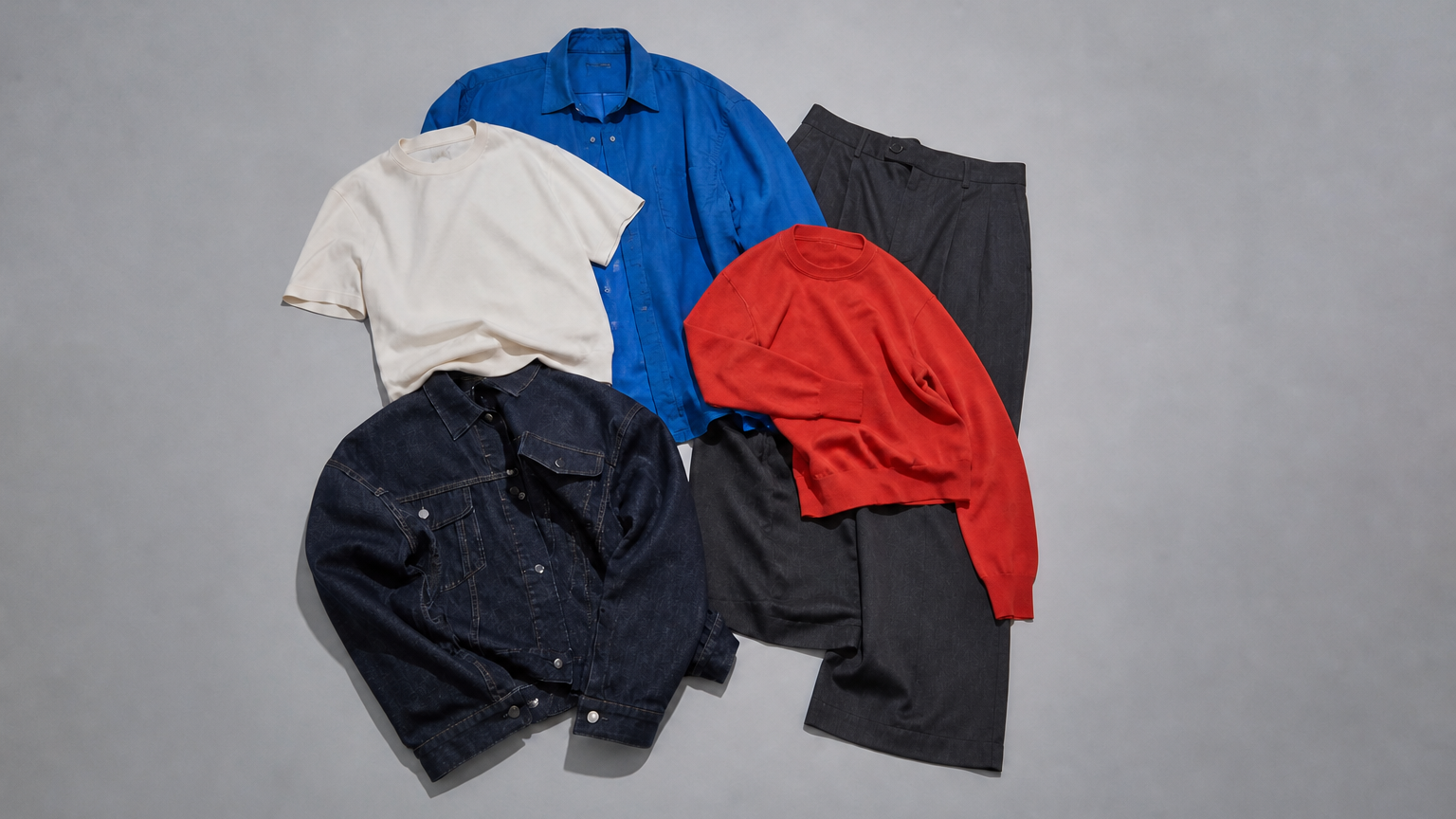
Start with the real contexts you expect to dress for, then select clothes you already own that offer an option for each. Keep a garment when it adds a role you would otherwise lack, not because it fills a preset capsule number. If you cannot name the context, garment availability, or role, leave that choice open rather than inventing a gap or treating the capsule as a verdict on your wardrobe.
Define a temporary period
Choose a period that has actual shape: the next two weeks, a work stretch with named commitments, or a particular season of your own routine. Use only contexts you can point to in your own calendar, invitation, workplace rule, or daily life. A generic “capsule season” is not a requirement.
Name roles, not a fixed list
For each context, describe the role you need a garment to play in plain language. One role may already be covered by something you reach for often. Another may remain uncertain because the garment is unavailable, the context is not settled, or you simply do not know yet. No role needs a universal name or a prescribed garment.
Use a context-to-role card
Make three columns: context; role already covered; option still uncertain. Fill them from clothes that are physically available to you now. The point is to see what is covered before selecting something else, not to assemble a complete outfit or count how few items you can own.
For example, a work context might have one role already covered by a shirt you know you can wear there. An evening context might stay uncertain until the plan is clearer. That uncertainty is information. It is not an instruction to shop.
Leave uncertainty open
A capsule becomes less useful when every blank space has to become a purchase, a donation decision, or a judgement about what you should own. If the context changes, change the card. If a garment is in the wash, unavailable, or simply not a choice you want to make today, write that down or leave the line empty.
Keep the method private
You do not need to upload a calendar, photograph your clothes, share a location, or make a complete inventory to use this method. Your records can stay offline and incomplete. The method works as a small prompt for your own decisions, not as a request for more data.
What this method does not decide
It cannot decide colour, fit, care, cost, weather, packing, an outfit for a date, whether a garment is worth keeping, or whether you should buy, donate, repair, store, or wear something. It does not promise easier dressing, lower spending, a smaller wardrobe, or a particular environmental outcome.
Method and limits
This is product-independent editorial guidance based on records a reader already holds: current contexts, clothes available to them, and an optional prior note. Those records are private, changeable, and incomplete. CLOOTHE does not catalogue clothes, read calendars, identify gaps, build capsules, plan looks, or make shopping recommendations.