
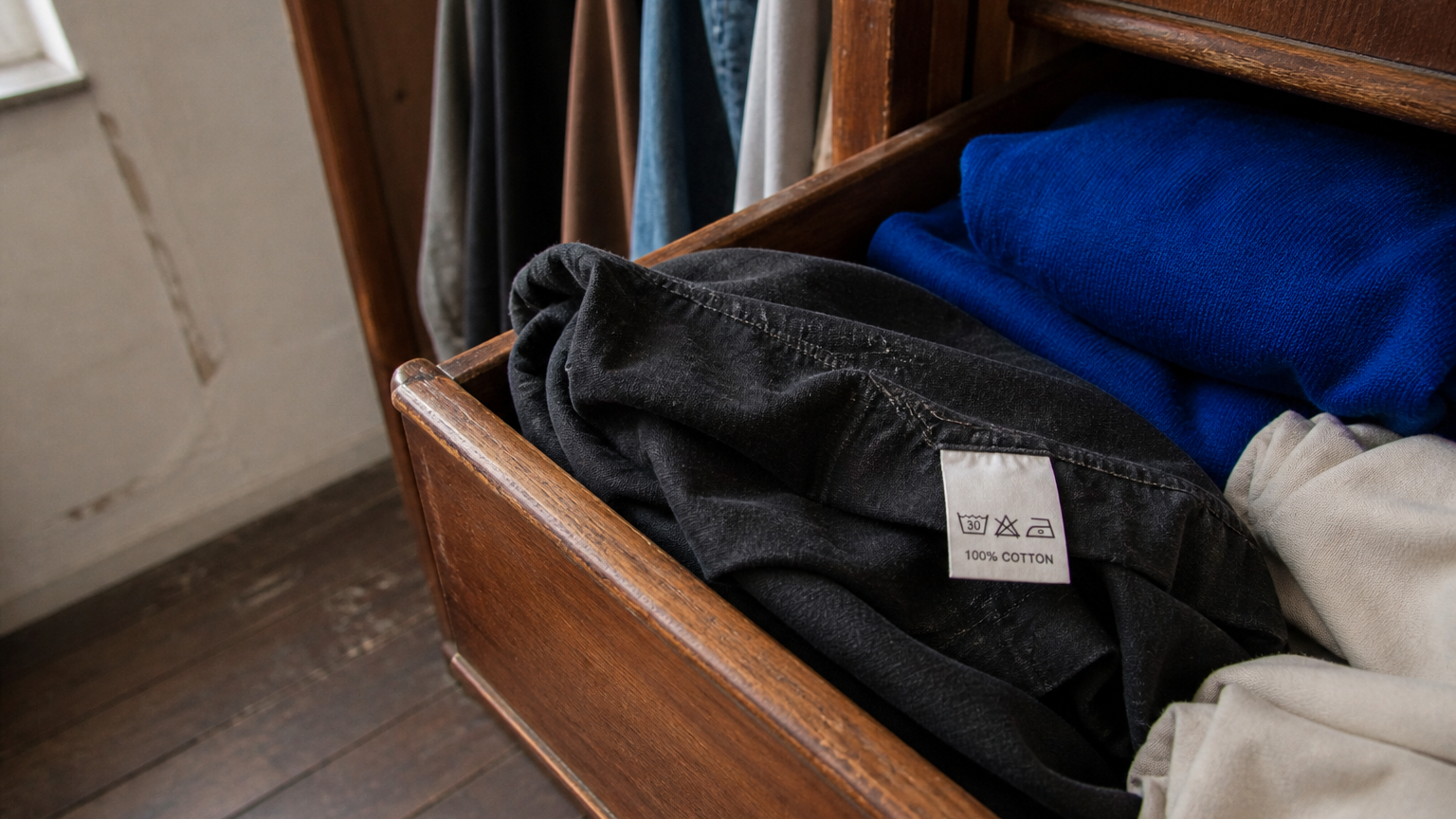
Keep the label’s instruction in a short note only when it changes what you do with that garment: a wash method, a drying limit, an ironing instruction, a clear warning, or a reason to separate it from other clothes. Keep that source information apart from your own observation, such as a stain, damage, or a missing label. A note is a reminder for one item, not proof that every similar garment should be treated the same way.
Start with the label, not the fibre
A fibre label and a care label do different jobs. The UK’s textile-labelling guidance concerns fibre content. In the United States, the Federal Trade Commission’s care-label rule describes regular-care information and warnings for covered textile apparel. Neither source turns a fibre name into a complete care plan for a particular piece of clothing.
This distinction matters when you are tempted to write “wool = hand wash” or “cotton = machine wash” in a wardrobe record. The garment’s label is the closer source. If it is present and legible, begin there. If it is missing or unclear, a note should record that uncertainty rather than invent an instruction.
Use two lines, with two different jobs
The first line is factual: “Label says: wash cold, do not tumble dry.” The second is personal context: “I observed: dye transferred once,” or “I keep this with delicate items.” Keeping the two separate makes it easier to revisit the note later. You can see what came from the garment and what came from your own experience.
Do not add the second line just because a field exists. It earns its place when it changes a real choice: whether to wash a piece with a particular load, whether to postpone a wash, or whether to look for the label again before deciding.
Save only the details that change a decision
A useful note does not need to copy every symbol. Start with the instruction that would change your next decision. A knit that cannot be tumble dried may need a note. A shirt whose label repeats the way you already wash it may not. Leave the field blank when the label adds nothing you will need to remember.
The same rule keeps a wardrobe record from becoming a laundry manual. This is about preserving a small piece of item-level context, not creating a permanent account of every wash, repair, storage condition, or fabric property.
When the label is missing or hard to read
Write “label missing” or “label unreadable” and stop there. A garment may have changed hands, faded, or been altered. A material guess, a familiar symbol, or advice that worked on another item cannot restore the missing information. If a care decision feels consequential, pause and seek appropriate professional advice rather than treating a wardrobe note as a substitute.
A narrow note is easier to trust
The purpose is modest: leave yourself enough context to make one ordinary decision with less guesswork. Keep the label’s words distinct from your own observation, keep the scope to one item, and allow uncertainty to remain visible. That is often more useful than a complete-looking record that quietly replaces the information you do not have.
Sources and scope
The FTC sources cited here describe US rules and guidance for covered textile apparel. The UK government source cited here concerns fibre-content labelling. CLOOTHE’s two-line note is editorial guidance, not a care recommendation, a warranty interpretation, or a substitute for the garment label.