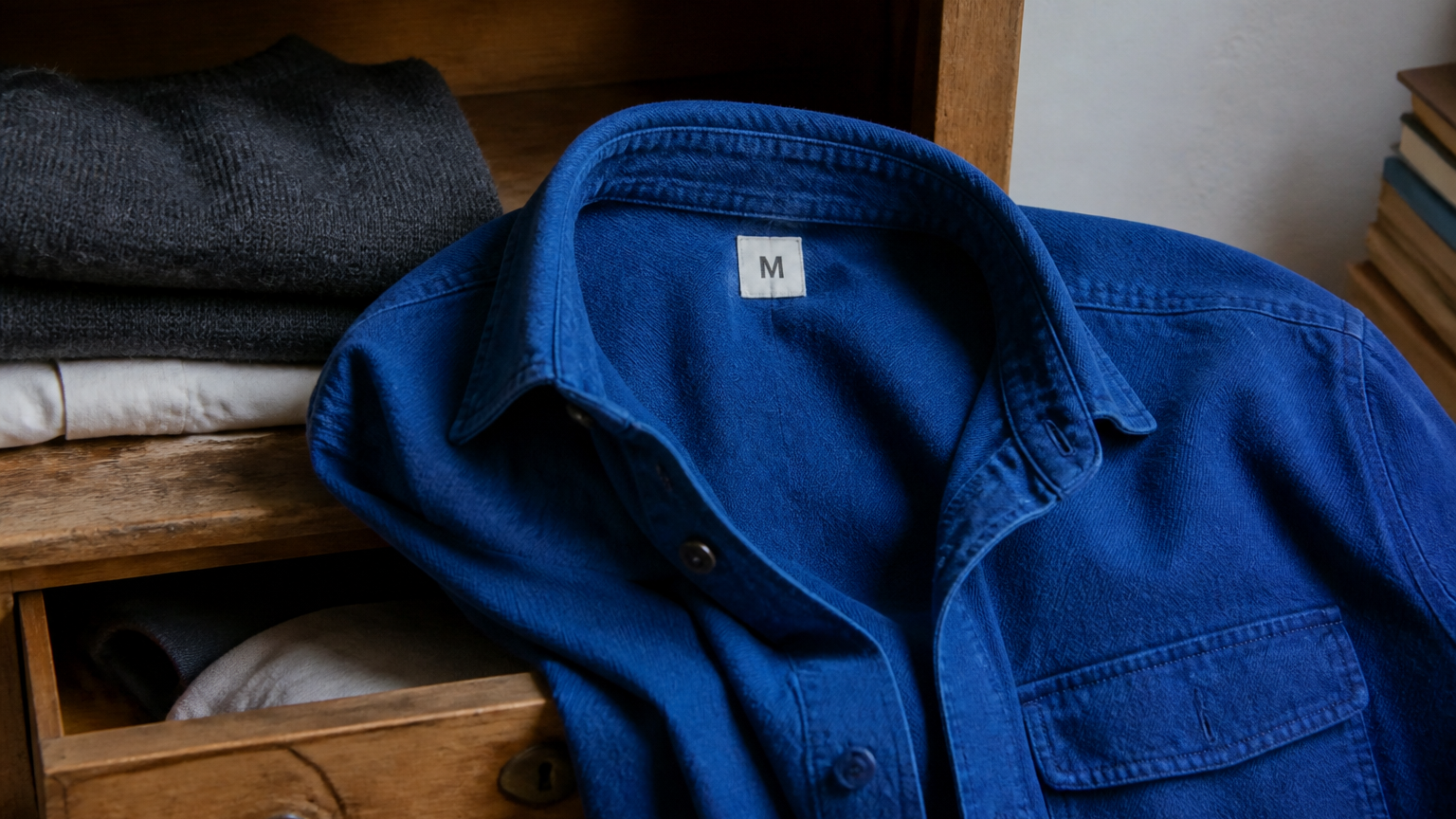
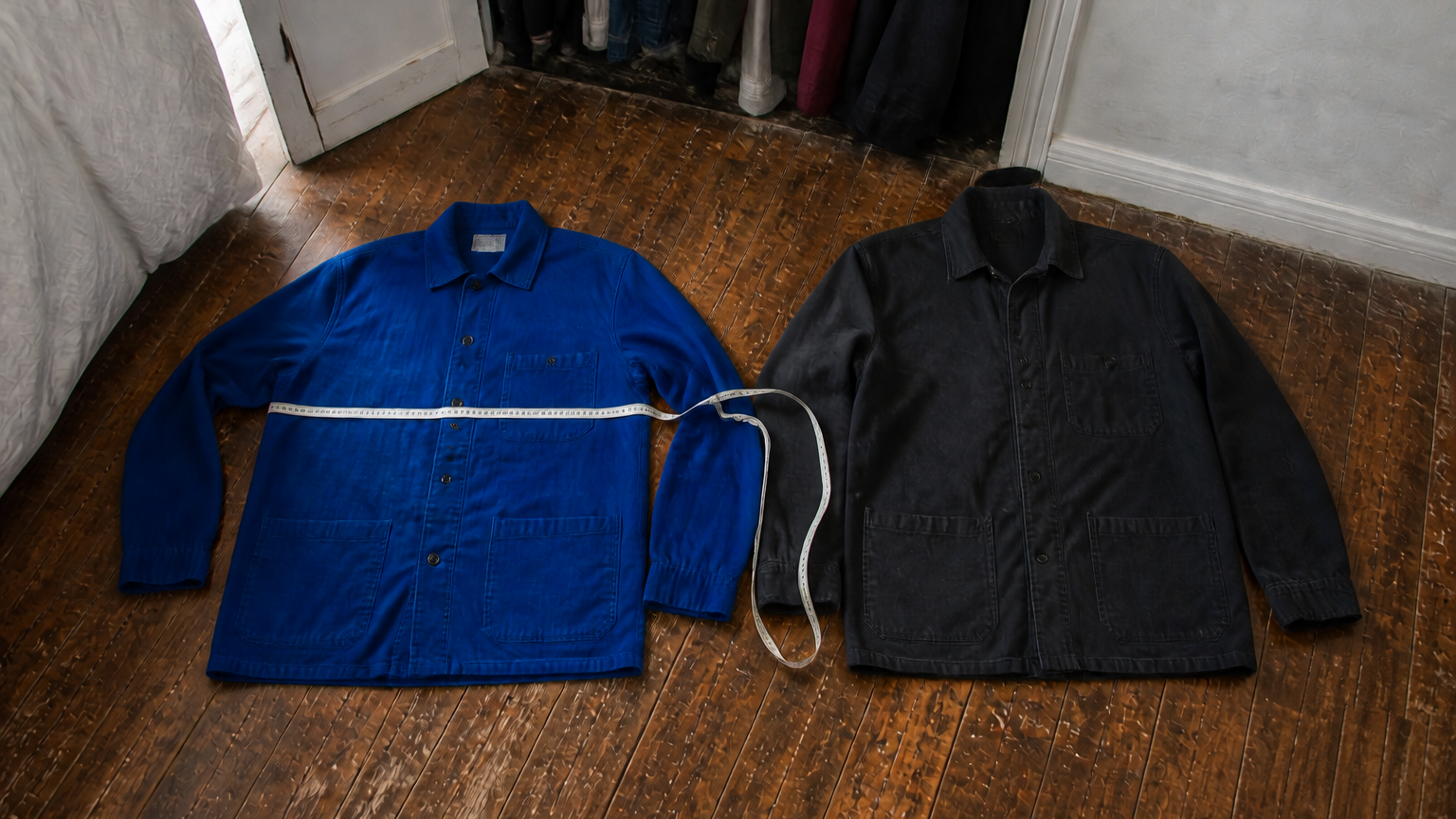
Start with a garment you already use as a reference, then compare only the one or two measurement points that matter for the question you have. Make sure the points are named the same way and that the garments are in a comparable state before you record a difference. Treat the result as information to inspect, not a prediction of fit, comfort, or appearance. A measurement comparison cannot replace trying, moving, or using a garment.
Begin with one question
A long list of numbers is rarely a useful starting point. Name the question first: are you comparing shoulder construction, the length of two shirts, or the rise of two pairs of trousers? Pick the detail that would change what you look at next. If there is no clear question, there is no need to measure.
Compare points that mean the same thing
ISO 18890 defines main garment measurement points and methods for garment dimensions. Its existence is a useful reminder that a measurement name needs a shared meaning before a difference can be interpreted. A number labelled one way on a product page and measured another way on a garment may not be comparable at all.
If you cannot tell how a point was named or taken, write “not comparable” and leave the result open. That is not a failure of the record. It prevents a neat-looking number from becoming a false conclusion.
Use a garment, not a body, as the reference
Put two garments on a table or another flat surface in a comparable state. Use the garment you already know as a reference, not as evidence about a body. ISO 8559-3 distinguishes body-measurement tables from garment dimensions; the two should not be collapsed into one conclusion.
A reference garment can provide context because you have used it. It cannot transfer its comfort, drape, movement, or appearance to another piece. Keep the comparison at the level of garment information.
Record a provisional difference
A simple comparison card needs only four parts: the question, the named point, the two values or observations, and a result such as “same range,” “different,” or “not comparable.” The final field is intentionally modest. It records what you saw without telling you what the garment will do in use.
Know where the method stops
A flat garment measurement cannot determine size, fit, comfort, movement, body shape, or a purchase choice. Brands may name or take points differently, and construction changes what a number means. If the comparison does not make the next step clearer, do not force a decision from it.
Sources and scope
ISO standards cited here describe methods, terminology, and the distinction between garment dimensions and body-measurement tables. CLOOTHE’s comparison card is editorial guidance. It is not tailoring instruction, a fit service, a body assessment, or a recommendation about a specific garment.