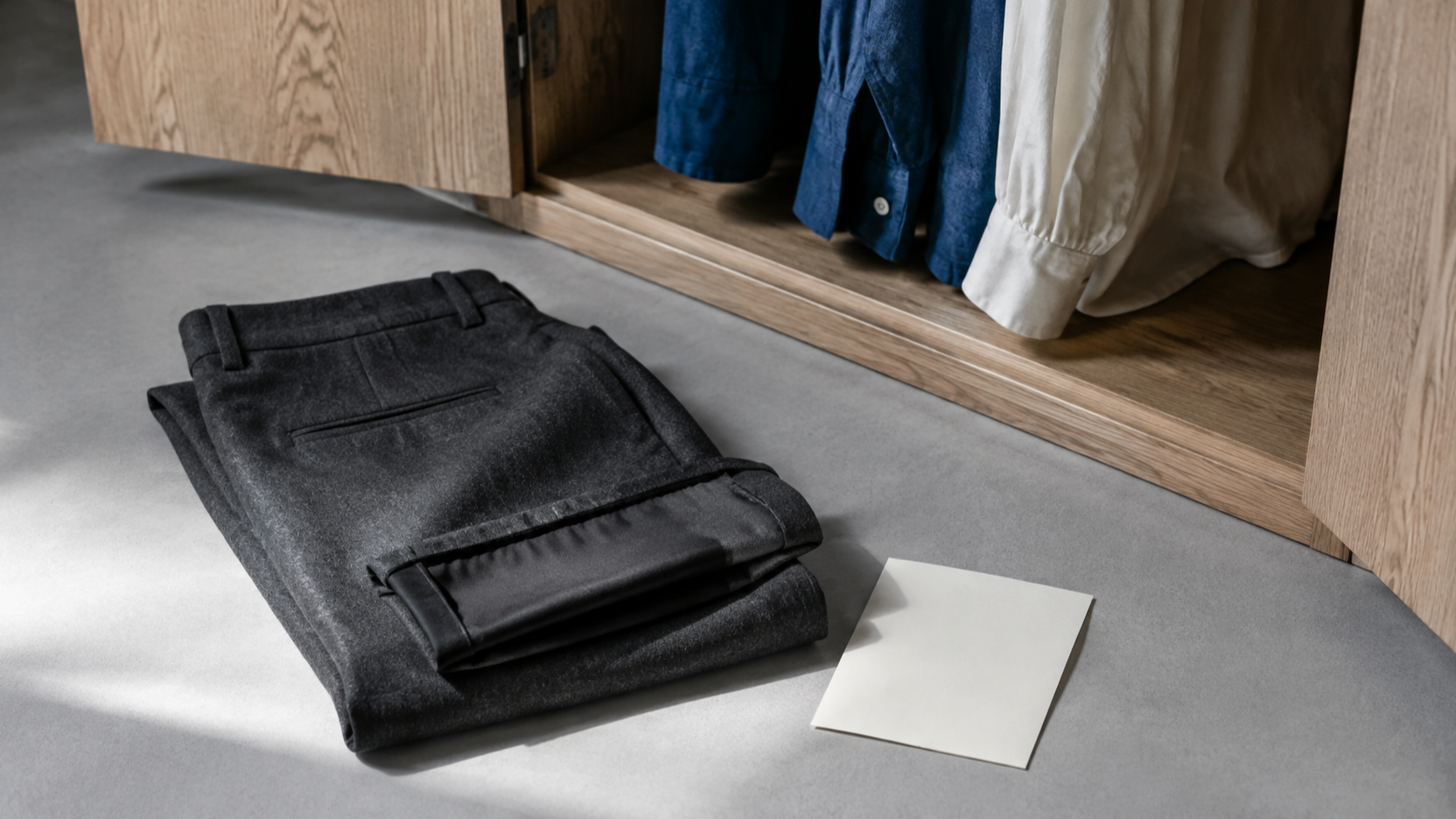
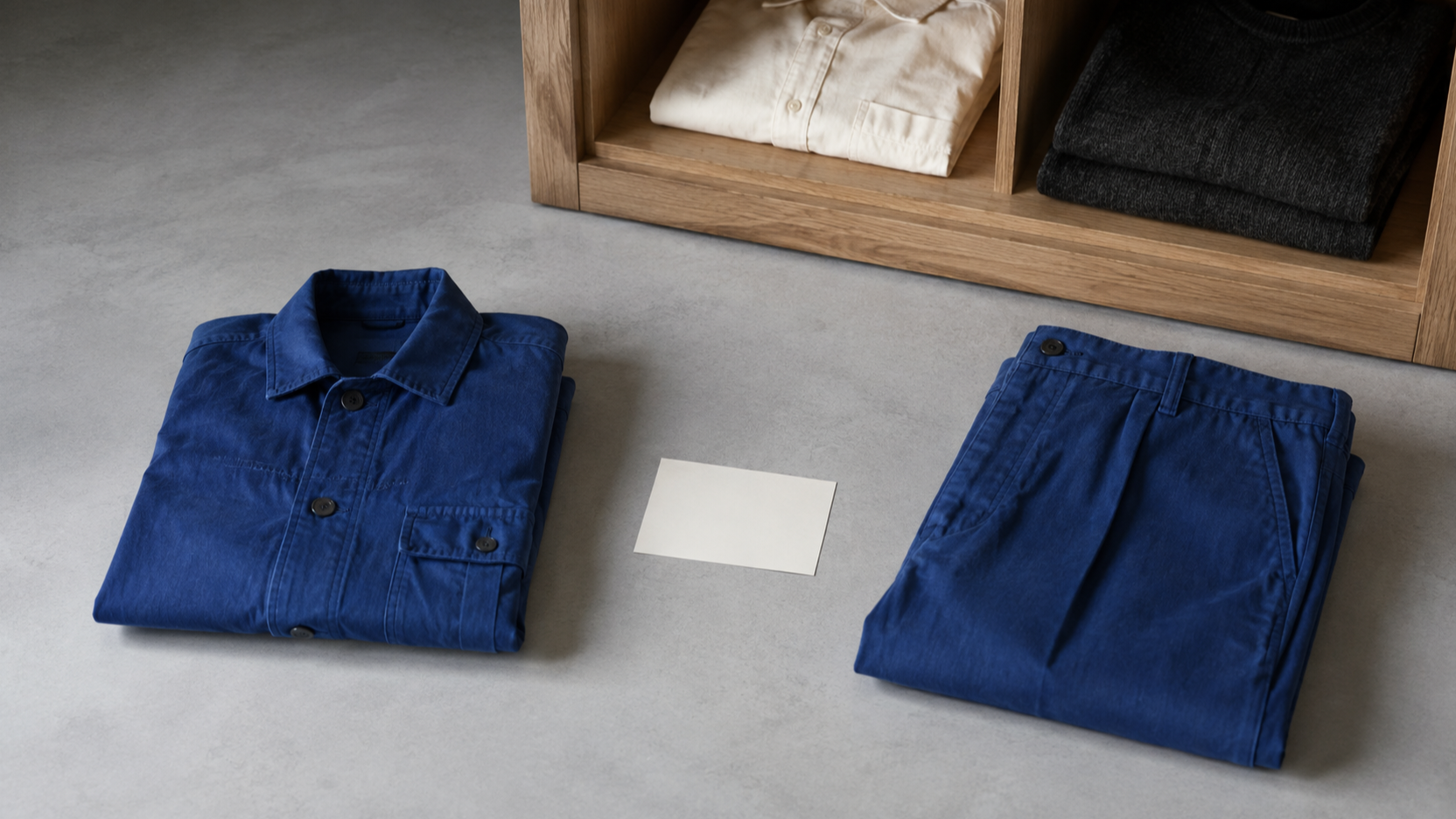
Record each wearable piece on its own, then add a set note only when it changes a decision. Keep original information with the individual pieces instead of assuming a matching fabric, purchase, or care label makes them identical. If information about one piece is missing, leave that part unresolved. A set note preserves the relationship without hiding separate clothes.
Start with the pieces, not the purchase
A blazer and trousers may be remembered as one set, but they are still separate things to wear, inspect, and record. The useful starting point is one entry for each piece, rather than a single record that merges them.
This does not mean every matching pair needs extra administration. Add a relationship only when it helps you remember something you would otherwise miss.
Add a relationship when it changes a decision
A short relationship line can be enough: “part of the same set” or “usually stored together.” It is a reminder of context, not a claim that the pieces have the same condition, fibre content, care needs, or history.
For example, a top and skirt may have been bought together while one piece has a missing label. The relationship is useful. Copying the known label information across is not.
Keep source information with each piece
FTC guidance for US manufacturers and importers distinguishes between multi-part units with the same care instructions and components with different care needs. UK Government textile-labelling guidance similarly addresses components with different fibre contents. These are producer-facing label examples, not a rule that any two matching clothes in a personal wardrobe share the same properties.
Use a three-part relationship card
Piece A: keep the original information that belongs to that garment. Piece B, or more: do the same for each additional item. Set relationship or unresolved difference: note the connection, then name anything you cannot confirm.
If a detail is unknown for one piece, leave it unknown. A clear gap is more useful than a tidy record built from copied assumptions.
What this cannot decide
A relationship note cannot tell you whether the pieces should be worn together, cleaned together, kept together, or valued together. It does not replace a category system, outfit plan, care instruction, or product recommendation. It simply keeps the relationship visible while the individual records remain intact.
Sources and method
This is CLOOTHE editorial guidance for personal record keeping. The FTC and UK Government sources are used only for their stated manufacturer and label contexts, accessed on 3 September 2026. No CLOOTHE feature for detecting, linking, storing, or recommending garments is asserted.