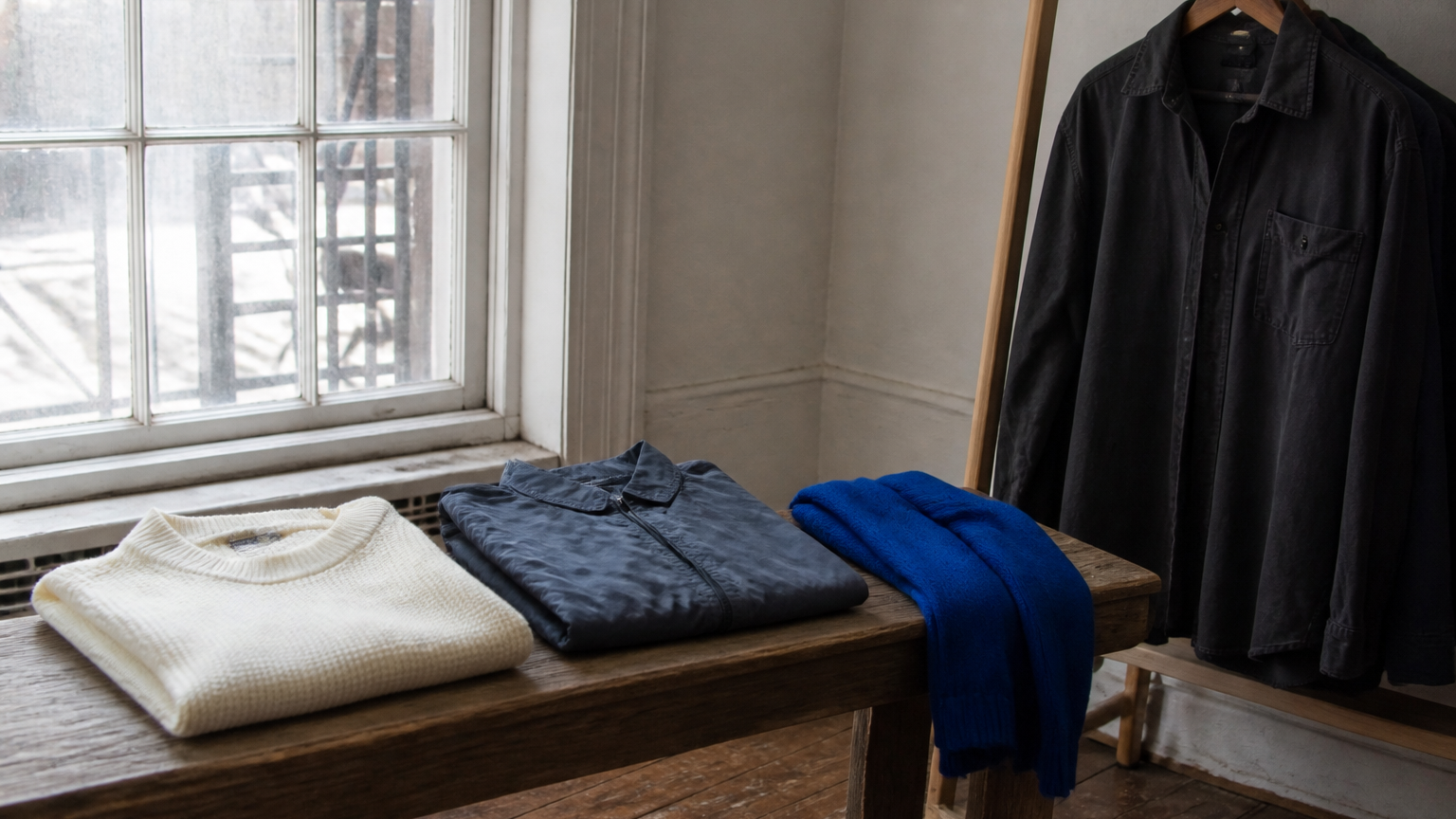
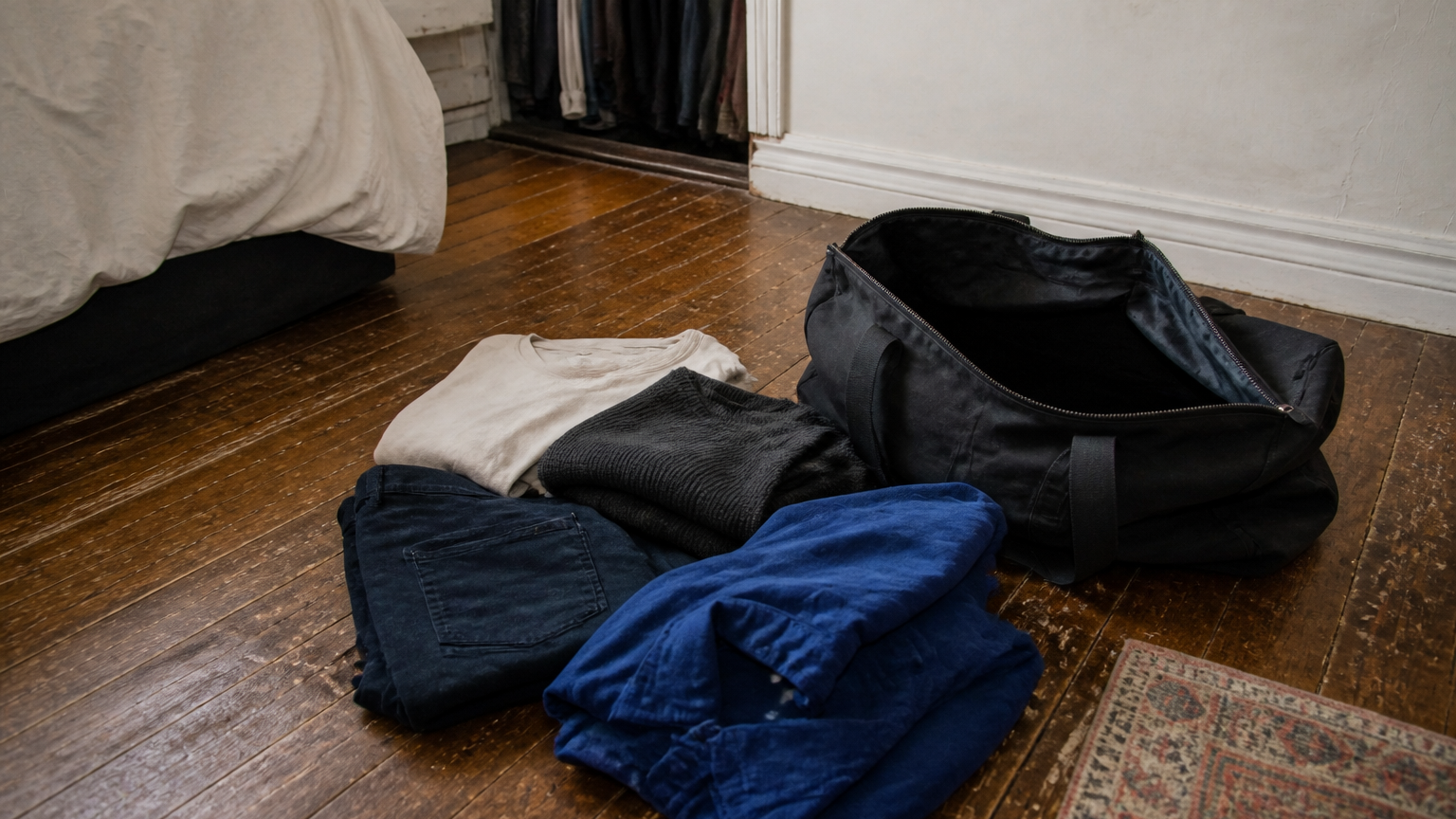
Begin with the moments the trip already asks of you, then choose familiar clothes that can cover more than one of them. Pack only after you have separated the clothing decision from the bag rules you still need to check. This is a way to reduce last-minute choices, not a packing list, a promise of comfort, or advice about airline compliance.
List the fixed parts of the trip
Write the parts that are already decided: travel, a work meeting, a long walk, dinner with friends, an event with a dress rule. Add anything that makes a real difference to what you can wear, including mobility, sensory, religious, cultural, medical, or access needs. Those constraints belong in the plan before you count garments.
Choose clothes with known jobs
Start with pieces you have already worn in similar circumstances. A pair of trousers that works for travel and dinner, or a shirt that works alone and under a layer, may earn its place twice. The aim is not a perfect capsule wardrobe. It is a small set whose uses you already understand.
For each fixed context, name one workable option. If the same garment covers two contexts without creating a problem for you, keep it. If it does not, give each context its own answer. Repetition is useful only when it still suits the person and trip in front of you.
Add one personal buffer
Leave room for the thing you know you reach for: an extra base layer, a familiar shoe, a garment needed for a specific routine, or simply a backup because laundry will not be practical. There is no universal number of outfits or rule about how little to bring. A plan that ignores your own habits is just a stricter list.
Keep baggage rules separate
Your clothing plan does not determine what a carrier will accept. GOV.UK advises travellers to check their airline’s baggage size and allowance, as well as relevant airport requirements. Check the exact carrier and airport information at the time of travel rather than relying on a static list or an old itinerary. This article does not interpret those rules.
Stop when each context is covered
You can stop when every fixed context has one workable option, the pieces have a plausible way of being carried, and you have included your own buffer. More combinations are not automatically more useful. If a later detail changes, revise the context it affects instead of starting the whole bag again.
What this cannot decide
This method cannot decide safety, border or carrier compliance, weather, laundry access, fit, comfort, dress-code acceptance, or whether you should buy anything. It does not build an itinerary, check live restrictions, select products, or choose clothes for you. It simply gives your existing clothes a practical role before you pack.
Source and scope
The GOV.UK source cited here describes general hand-luggage restrictions at UK airports. It is used only to support the need to check current airline and airport guidance. CLOOTHE’s short-trip method is independent editorial guidance, not travel, airline, safety, or shopping advice.