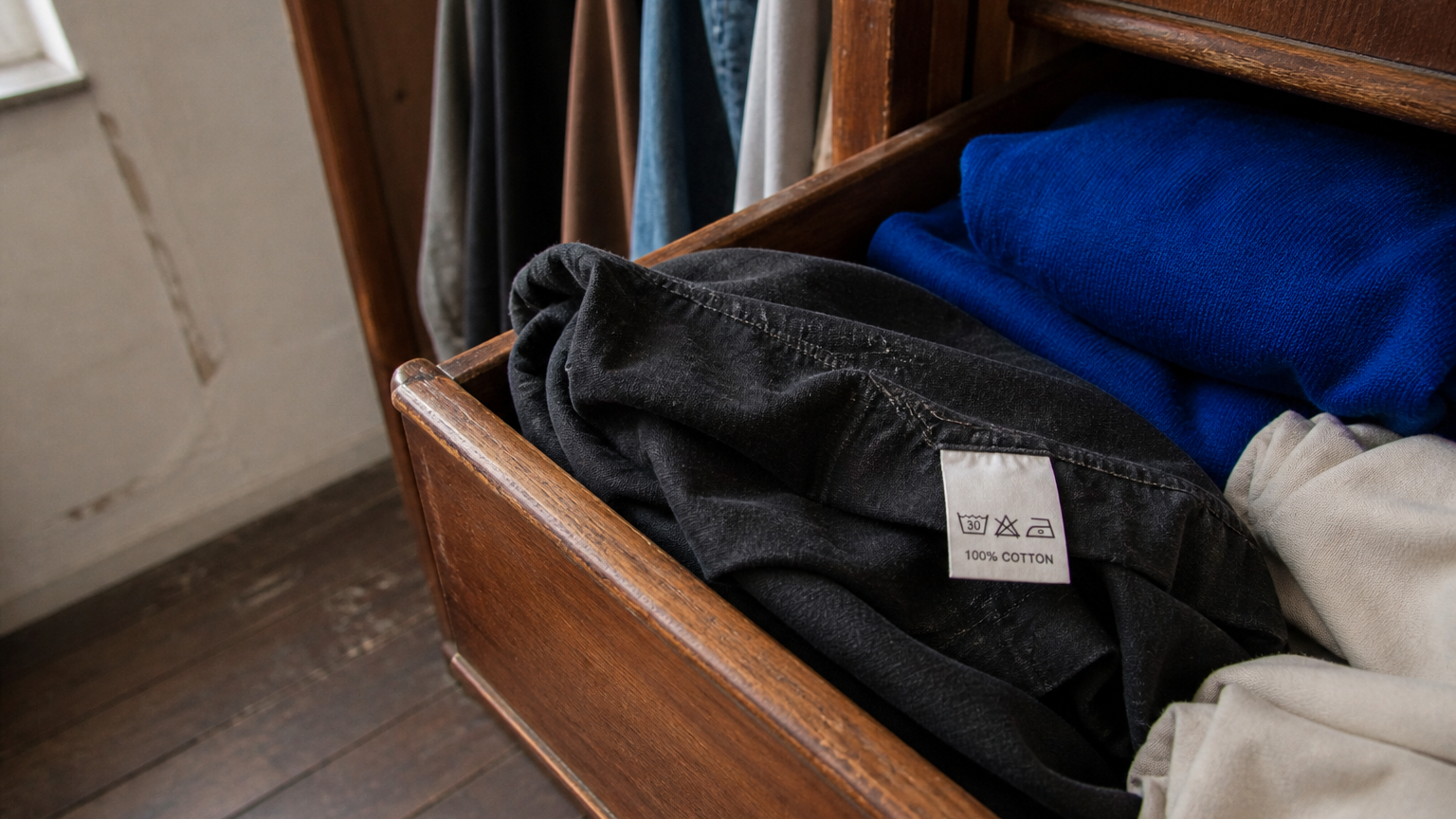
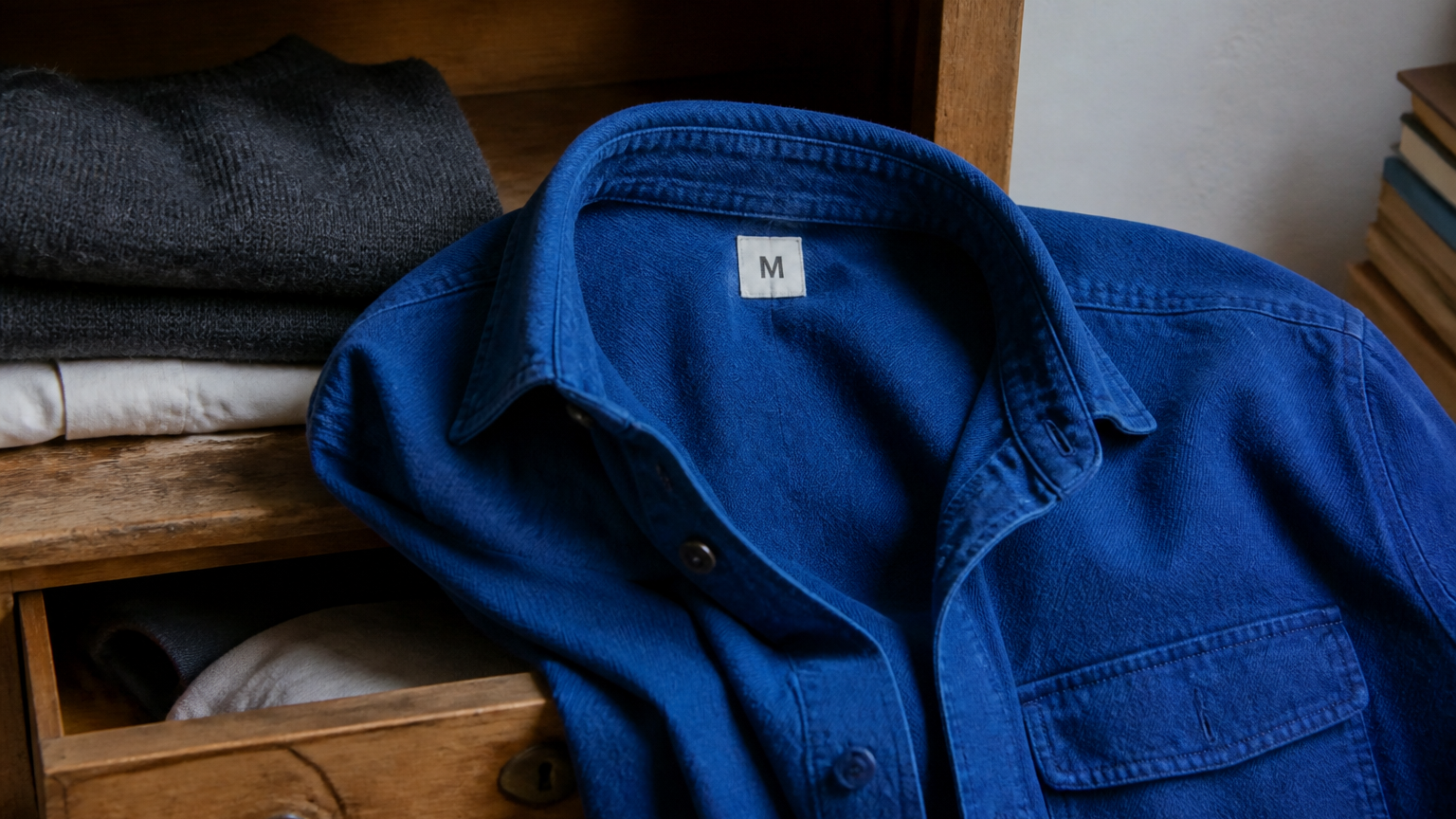
A size label is a designation within a clothing sizing system. It is not a full description of a garment, and it cannot guarantee that a garment will feel right for you. When the label is not enough, separate three questions: what the designation refers to, what dimensions the garment has, and what amount of ease or preference you want. This is a way to read information, not a fit prediction.
A label names a category
Labels such as S, M, 10, 42, or regular are useful shorthand inside a particular sizing system. ISO 8559-1 concerns anthropometric measurements used as a basis for clothing size and shape profiles. That scope is important: it describes a framework for designations, not an outcome for an individual person in a particular garment.
Treat the label as a starting point. It may help you group clothes you already own or understand how a maker describes a range. It does not tell you the garment’s exact dimensions, its construction, how it moves, or whether you will want more or less ease in it.
Garment dimensions answer a different question
A garment can have its own dimensions even when its label is familiar. ISO 8559-3 distinguishes body-measurement tables from garment dimensions. The distinction is practical: a chart about a sizing system and a measurement from a particular shirt are not interchangeable pieces of information.
That does not mean every wardrobe record needs measurements. It means a label alone should not be asked to do a job it cannot do. If the missing question is about a garment itself, look for garment information rather than turning the label into a verdict.
Preference is separate information
Comfort, movement, sensory preference, cultural context, and the amount of ease someone wants are personal context. ASTM D5219 provides terminology for body dimensions used in apparel sizing; it does not define a universal preference or tell a person what should feel comfortable.
This is why two people can use the same label differently without either being wrong. A designation can be consistent within a system while the desired result remains personal. The useful question is not whether a label is good or bad. It is whether it answers the decision in front of you.
Use a three-part reading card
When a size statement appears, sort it into one of three places. Label: the designation printed on the garment. Garment: a dimension or construction detail about that individual piece. Preference: the room, movement, or feeling you want. If you cannot say which place a statement belongs to, do not use it to make a personal fit conclusion.
What this cannot decide
This framework cannot assign a body shape, find a true size, predict comfort, compare retailers, or decide whether to buy or return a garment. It does not turn measurements into a personal diagnosis. It simply keeps label information, garment information, and preference from being mistaken for the same thing.
Sources and scope
ISO and ASTM sources cited here define scope and terminology for apparel sizing and measurement. CLOOTHE’s three-part card is editorial guidance. It is not a sizing service, a body assessment, a fit test, or a recommendation about a specific garment.