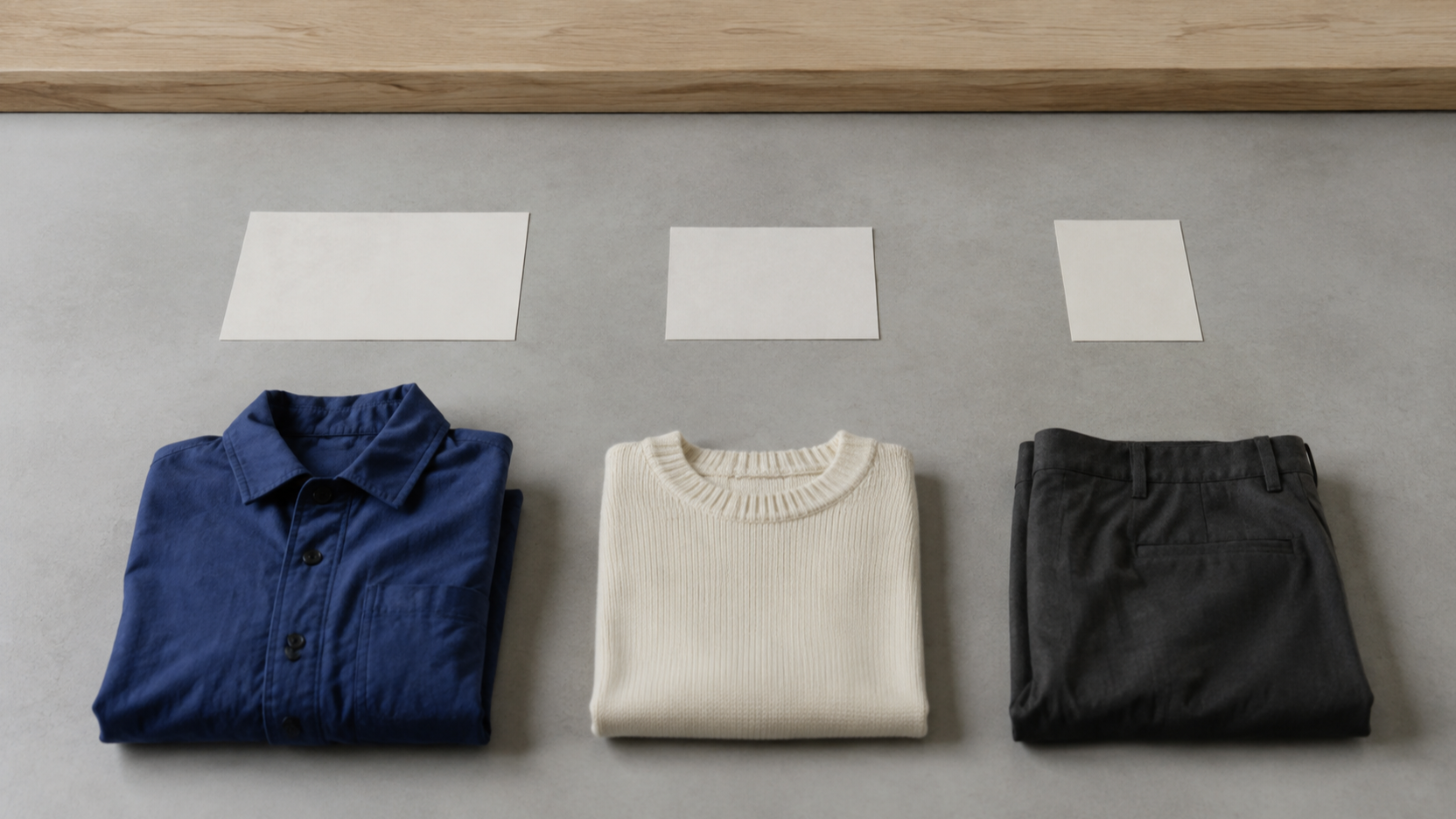
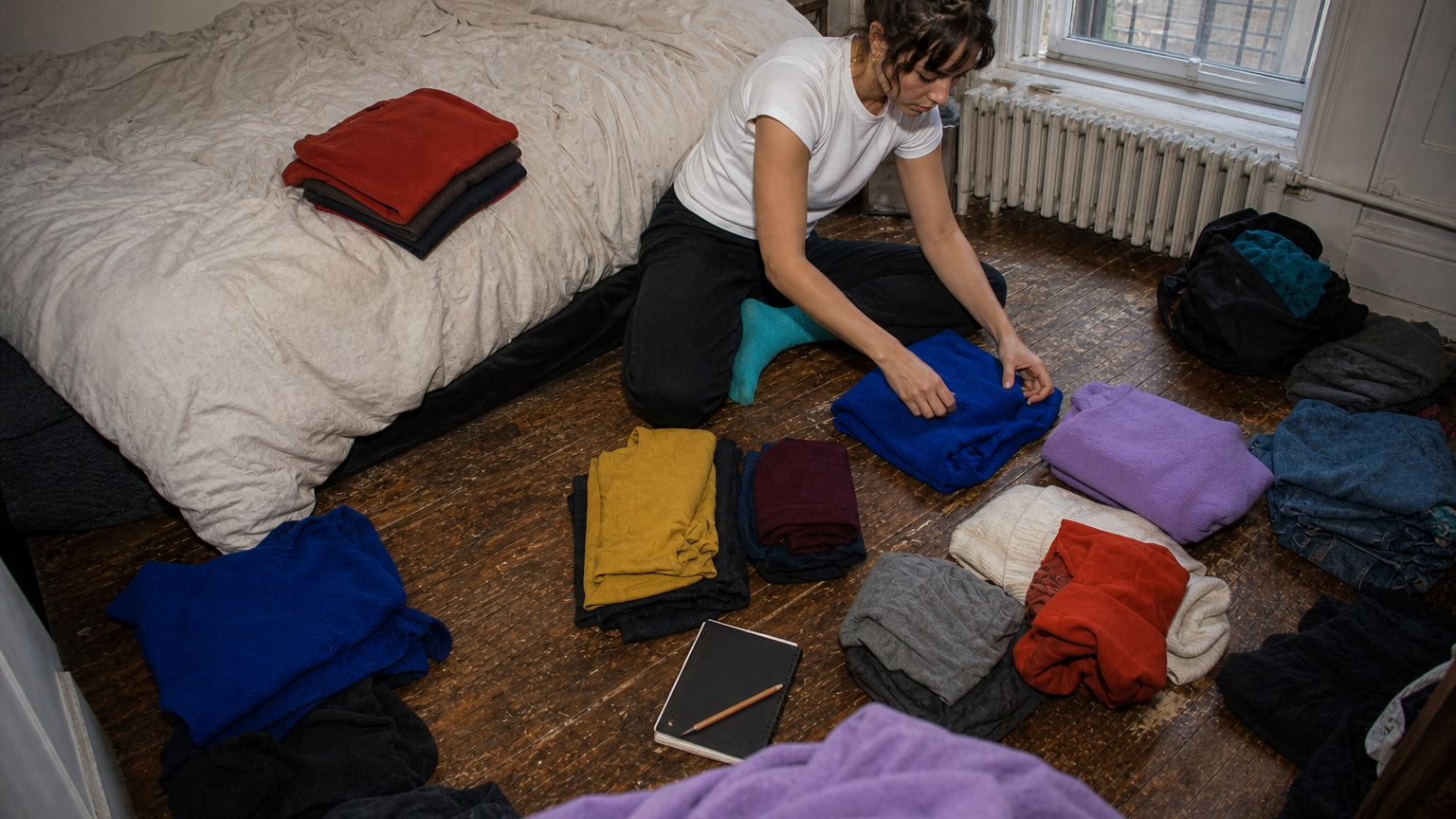
Start with the smallest system that can answer the decision you need to make today. Use a photo album when visual recall is enough. Use a spreadsheet when you need sortable details. Consider a dedicated digital wardrobe system only when item records will support decisions you make repeatedly. Begin with a small real subset, then change formats only when the current one stops being useful.
Choose by the decision, not by completeness
A useful record is not necessarily a complete record. Before choosing a format, name the question you want it to answer. Do you mainly want to remember what you own? Compare a few details? Or return to the same pieces when getting dressed? Those are different jobs, and they do not need the same setup.
This is CLOOTHE editorial guidance, not a universal system. The right amount of effort depends on your available time, access needs, storage preferences and how you prefer to think.
When a photo album is enough
Choose an album when the main task is visual recall. A small set of photographs can be enough to remind you that a jacket exists, show the colour of a knit, or make seasonal storage easier to scan. Apple’s Photos documentation describes albums and folders as ways to organise photos; it also notes that deleting an album does not delete the photos from your library. That is an iPhone-specific feature, not a rule for every photo service.
Keep the first version deliberately small: one named album for the pieces you wear often, or one seasonal set. If you find yourself searching for a detail that a photograph cannot show, that is a signal to add a field elsewhere—not a reason to start again.
When a spreadsheet is enough
Choose a spreadsheet when the question is about details rather than images. You might want to compare fabric, colour, repair status, location or the date you last wore something. Microsoft documents how Excel can turn a range with headers into a table; Google documents pivot tables for summarising a source range with column headers. Neither feature is required to begin.
Start with only the fields that make your next decision easier. A row for each piece and two or three columns is often clearer than a highly detailed system you stop updating. If the record becomes hard to read, reduce it before adding more structure.
When a dedicated digital wardrobe may be worth considering
A dedicated system can be worth considering when you return to item-level records often enough that an album or sheet begins to feel like extra work. The question is not whether an app is more complete. It is whether maintaining one record helps with a recurring decision you already have.
Before changing formats, ask what is creating friction: missing details, correction burden, difficulty finding an item, or simply a system that no longer fits your routine. If the answer is unclear, stay with the lighter method a little longer.
A simple way to decide
If you mostly need to see what you own, start with a photo album. If you need to compare a small number of attributes, start with a spreadsheet. If you repeatedly make decisions from individual item records and the lighter formats are getting in the way, explore a dedicated system. There is no winner column because the best choice is the one you can keep useful.
What this comparison cannot decide for you
No framework can settle questions of privacy, shared wardrobes, seasonal storage, accessibility or personal preference on your behalf. A system that works well for one person may add pressure for another. The useful standard is modest: does this help you make a decision you already need to make?