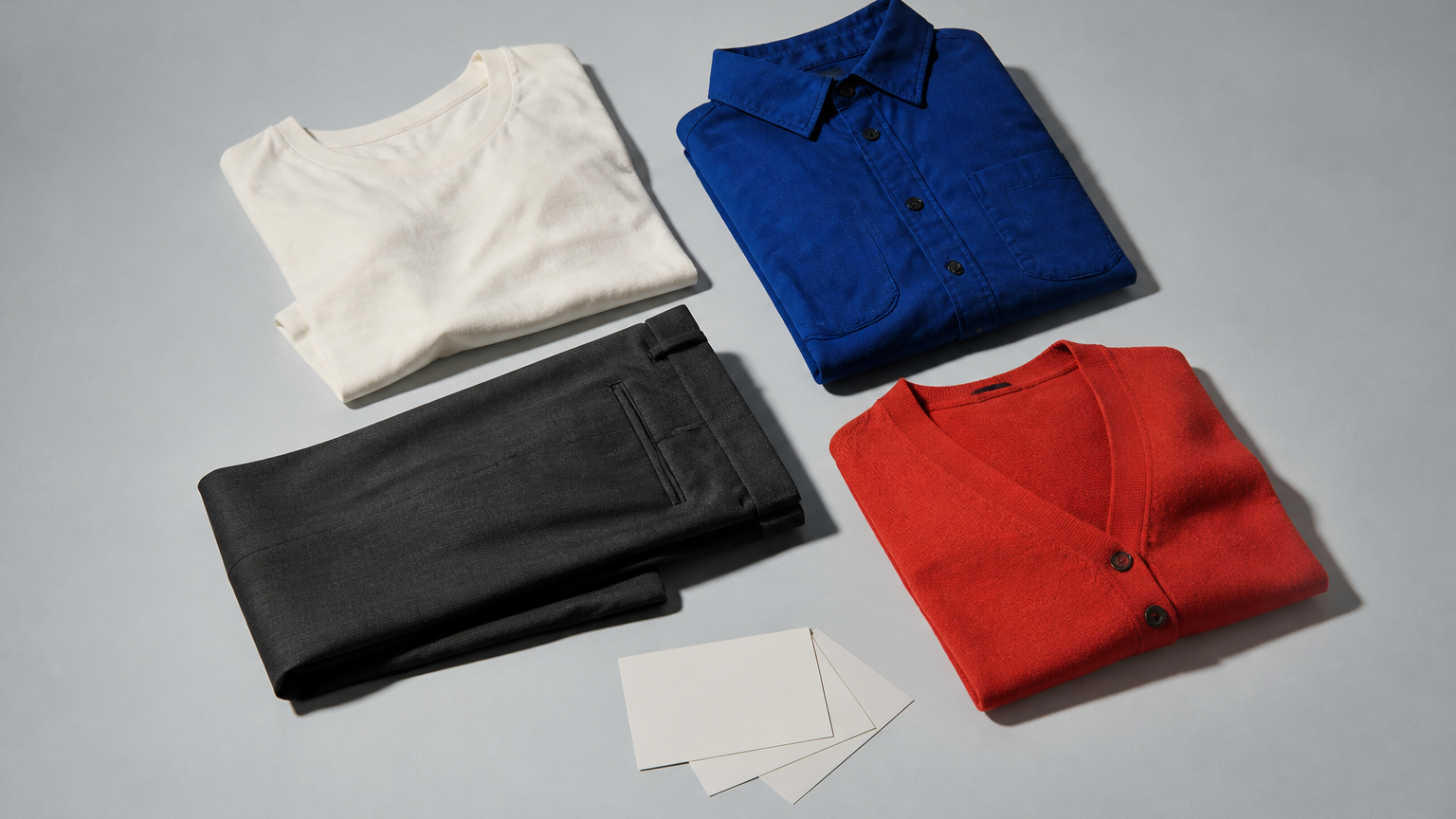
Start with the care instructions and warnings on the labels in front of you. Put garments in the same proposed load only when those instructions do not conflict. If a label is missing, unreadable or asks for something different, leave that garment out rather than filling the gap with a rule of thumb. This is a cautious way to sort one load; it does not promise a washing result.
Read the instruction and the warning separately
In the United States, the Federal Trade Commission’s care-label rule covers regular-care information for covered textile apparel. Its examples include warnings such as “wash with like colors” and “wash separately.” That is useful context for reading a label, but it is not a universal laundry chart and it cannot tell you what will happen with two particular garments.
Use a label-conflict card
For each garment, write down only three things: the stated washing instruction, any warning, and the decision for this proposed load. Mark it compatible when the visible instructions and warnings do not conflict. Mark it separate when one label calls for something different. Mark it not enough information when you cannot read or find the information. The last category is a valid answer, not a problem to solve by guessing.
When the answer is separate
Keep the conclusion narrow. “Separate” means that this garment does not belong in this proposed load on the information you have. It does not explain why, recommend a different setting or tell you how to care for the item. The label remains the relevant instruction.
When there is not enough information
A missing or illegible label is a stop sign for this small decision. Fabric content, garment type and the care needs of a similar item are not substitutes for the instruction that is absent. Leave the garment aside until you can check a reliable source for that exact item or decide how to handle the uncertainty yourself.
What this method does not decide
This comparison does not decide stain treatment, detergent, machine settings, material care or whether a garment will be safe from damage. It is only a way to avoid treating unknown information as if it were known. For any other question, return to the garment’s own instructions and an appropriate authoritative source.
Sources and method
The factual context in this guide is limited to the US Federal Trade Commission’s care-label rule and its compliance guidance, accessed 1 September 2026. The compatible, separate and not enough information card is CLOOTHE editorial guidance for comparing one proposed load; it is not textile-care, safety or product advice.